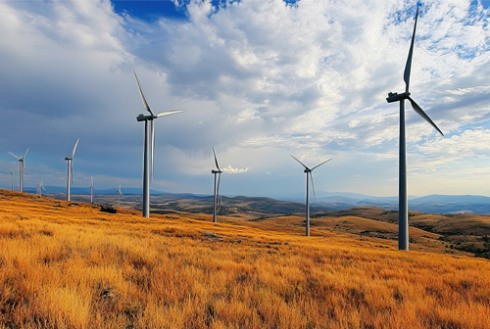
The Union Budget 2026–27 reinforces infrastructure-led growth and energy transition through higher capital expenditure, sustained incentives for clean energy and advanced manufacturing, and major investments in transport and urban infrastructure. Together, these measures aim to attract greater private investment, strengthen energy security, and build globally competitive industrial and logistics ecosystems.
Partner: Neeraj Menon,
Senior Associate: Arsh Jha, Associate: Yashaswi Belani
The Union Budget for 2026-27 (Budget), presented on 1 February 2026, underscores the government’s commitment to infrastructure-led growth, sustainable development, and energy security. The Budget is anchored in three principles:
accelerating economic growth,
fulfilling citizens’ aspirations, and
ensuring equitable access to opportunities.
With capital expenditure raised to INR 12.2 lakh crore, the Budget provides a strong push for infrastructure while targeting a fiscal deficit of 4.3% of gross domestic product (GDP).
The key highlights impacting the energy and infrastructure sectors are discussed below.
1.Facilitating energy transition and promoting domestic manufacturing
1.1 Nuclear energy
The government has extended the basic customs duty (BCD) exemption on imports of goods required for nuclear power projects till 2035. The exemption will now apply to all nuclear power plants, irrespective of capacity. This proposal along with BCD exemption on import of monazite signals continued policy support for nuclear energy as a key component of India’s clean energy transition and provides long-term certainty for investments, encouraging global technology partnerships and domestic capability building. For energy-intensive industries, this measure strengthens prospects for reliable, low-carbon base-load power, reducing energy supply risk. Earlier the Govt had enacted SHANTI Act, 2025, opening up nuclear energy production to private players. The Budget proposals tie up with the greater policy objective of diversifying the energy mix of our country.
1.2 Solar and clean energy manufacturing
The Budget introduced BCD exemptions on the following to encourage domestic clean energy:
import of sodium antimonate (for use in the manufacture of solar glass) and lithium compounds (for lithium-ion cells);
capital goods for battery energy storage systems (BESS), extending the existing exemption for li-ion cell manufacturing; and
capital goods for processing critical minerals.
These exemptions, coupled with INR 1,000 crore in viability gap funding for BESS, aim to reduce input costs and support domestic production. Additionally, the rooftop solar scheme has been allocated INR 22,000 crore to cover one crore households by March 2027.
1.3 Biogas blended compressed natural gas
The Budget proposes excluding biogas-blended compressed natural gas from the assessable value for Central Excise duty, addressing double taxation with Goods and Services Tax (GST). This is expected to improve the commercial viability of compressed biogas (CBG) production. The measure supports the Sustainable Alternative Towards Affordable Transportation (SATAT) Scheme by encouraging private investment and long-term procurement of CBG by oil marketing companies, helping accelerate infrastructure development towards the 15 million tonne CBG production target.
1.4 Carbon capture, utilisation and storage
An outlay of INR 20,000 crore over five years is allocated for carbon capture, utilisation and storage (CCUS) to improve readiness in the power, steel, cement, refinery, and chemical sectors. This continues the CCUS roadmap announced in December 2025, promoting decarbonisation of hard-to-abate industries.
1.5 Rare earth corridors
Dedicated rare earth corridors will be established in Odisha, Kerala, Andhra Pradesh, and Tamil Nadu to promote integrated mining, processing, and manufacturing. Building on the INR 7,000 crore outlay for the Rare Earth Permanent Magnets Scheme (November 2025), this initiative aims to build domestic capabilities and reduce import dependence for components essential for electric vehicles and wind turbines.
1.6 India Semiconductor Mission 2.0
India Semiconductor Mission 2.0 is launched with an INR 40,000 crore allocation to focus on industry-led research and development, and training. This supports the clean technology ecosystem, as semiconductors are critical for renewable energy, electric vehicles, and grid management.
2.Emphasising infrastructure development
2.1 Capital expenditure
Capital expenditure for FY 2026-27 is increased by nearly 9% to INR 12.2 lakh crore (from INR 11.2 lakh crore in FY 2025-26). This continued focus on infrastructure aims to attract private investment and create employment.
2.2 Dedicated freight corridor and high-speed rail corridors
A new dedicated freight corridor from Dankuni (West Bengal) to Surat (Gujarat) and seven new high-speed rail corridors connecting major hubs with Tier-II/III cities have been announced. These projects are expected to drive investment in civil works and rolling stock. The electrified rail network will promote a shift from road and air transport to low-carbon mobility, potentially incentivising investment in renewable energy and grid infrastructure to meet increased electricity demand.
2.3 City economic regions
The Budget proposes creating City Economic Regions (CER) with an allocation of INR 5,000 crore per CER over five years, funded through a competitive, reform-based model. CERs will coordinate development across cities (population > five lakh), surrounding areas, and industrial corridors to support growth in Tier-II/III cities. The initiative aims to strengthen urban infrastructure and mobilise investment through instruments like Infrastructure Investment Trusts (InvIT) and Real Estate Investment Trusts (REIT), and institutions like National Investment and Infrastructure Fund (NIIF) and National Bank for Financing Infrastructure and Development (NaBFID).
2.4 National Waterways and Inland Water Transport
To promote sustainable cargo movement, 20 new national waterways will be operationalised over five years, supported by a new ship repair ecosystem in Varanasi and Patna. A Coastal Cargo Promotion Scheme aims to double the share of inland and coastal shipping to 12% by 2047, reducing logistics costs. Additionally, a safe harbour provision for non-residents (a fixed 2% profit margin on components warehoused in India) is introduced to provide tax certainty and encourage global supply-chain integration.
2.5 Infrastructure Risk Guarantee Fund
An Infrastructure Risk Guarantee Fund is proposed to provide partial loan guarantees, aiming to reduce risks for private developers, strengthen private sector participation, and de-risk large capital projects.
2.6 Electric buses
A provision for 4,000 electric buses reinforces the government’s push for sustainable urban mobility.
3.Transport sector initiatives
3.1 East Coast Industrial Corridor
An integrated East Coast Industrial Corridor, with a major node at Durgapur, has been announced to strengthen connectivity and industrial development in the eastern region under the Purvodaya initiative.
3.2 Aviation sector
BCD exemption is provided on components for manufacturing civilian aircraft and on raw materials for manufacturing aircraft parts used in maintenance, repair and overhaul by defence sector units.
4.Data centres
A tax holiday until 2047 is proposed for foreign companies providing global cloud services from India, provided Indian customer services are routed through a local reseller. A 15% safe harbour margin on costs for related-party data centre services is also introduced. These measures aim to enhance tax certainty, reduce operational costs, and mitigate transfer pricing risks for multinational groups.
Looking ahead
The Budget establishes an investment-ready framework by combining increased capital expenditure with targeted incentives for clean energy, digital infrastructure, and advanced manufacturing. Measures like duty rationalisation, tax certainty, and the Infrastructure Risk Guarantee Fund are expected to improve project viability and attract stable investment in capital-intensive sectors.
The Budget highlights opportunities in renewables, energy storage, semiconductors, and electrified mobility. Its focus on supply-chain resilience, policy continuity, and fiscal discipline reinforces India’s attractiveness to investors. The emphasis on competitive funding, performance-linked incentives, and public-private partnerships signals a market-oriented approach. For stakeholders, the Budget underscores the need for robust project structuring and alignment with evolving procurement and financing frameworks.
If you require any further information about the material contained in this newsletter, please get in touch with your Trilegal relationship partner or send an email to alerts@trilegal.com. The contents of this newsletter are intended for informational purposes only and are not in the nature of a legal opinion. Readers are encouraged to seek legal counsel prior to acting upon any of the information provided herein.