19 Oct 2026

Why the law is yet to crack the digital privacy code
26 Sep 2026


26 Sep 2026
This is a link enhanced version of the article that first appeared in The Times of India.
Article Overview:
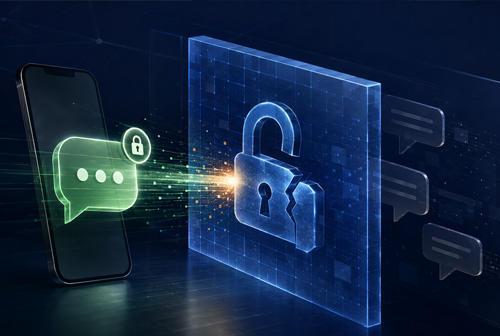
The article examines the growing tension between investigative powers and individual digital privacy as smartphones increasingly contain extensive personal, professional and sensitive information. Against the backdrop of journalist Abhishek Upadhyay’s case, it looks at the search and seizure powers available under the Bharatiya Nagarik Suraksha Sanhita (BNSS), concerns around access to electronic devices and stored data, the right against self-incrimination, and the need for clearer safeguards and judicial oversight when investigating digital devices.
Our Partner, Anuj Berry, shared his perspective. Here’s what he had to say:
“When BNSS expanded these powers to include electronic communication, it added no corresponding safeguards. The law conflates seizure (taking the device) with search (examining its contents). Once seized, no separate authorisation is needed to image (mirror) the device.”
“There is a regulatory asymmetry where real-time interception requires strict judicial oversight but accessing stored data on a seized phone requires none. The constitutional limit on compelling the revealing of passwords or providing biometrics also remains unsettled due to conflicting court decisions.”
“A reasoned court order must be obtained to examine a device’s contents, distinct from the order to seize it. In urgent cases, access must be regularised by a warrant within a fixed period (e.g., 48 hours), failing which the material becomes inadmissible. The orders must specify the offence, categories of data, date ranges and search terms. The examination must be confined to these defined terms.”
Download PDF

Insurance distribution reforms: will lower commissions benefit policyholders?

Deal: Trilegal advised Blackstone-backed ASK Investment Managers on its proposed acquisition of SageOne Investment Managers

Deal : Trilegal advises J Infratech on INR 6,000.00 million IPO and an offer for sale of up to 10,000,000 equity shares by the promoter selling shareholders
Under the rules of the Bar Council of India, Trilegal is prohibited from soliciting work or advertising in any form or manner. By accessing this website, www.trilegal.com, you acknowledge that:
We prioritize your privacy. Before proceeding, we encourage you to read our privacy policy, which outlines the below, and terms of use to understand how we handle your data:
For more information, please read our terms of use and our privacy policy.